Why the courtyard
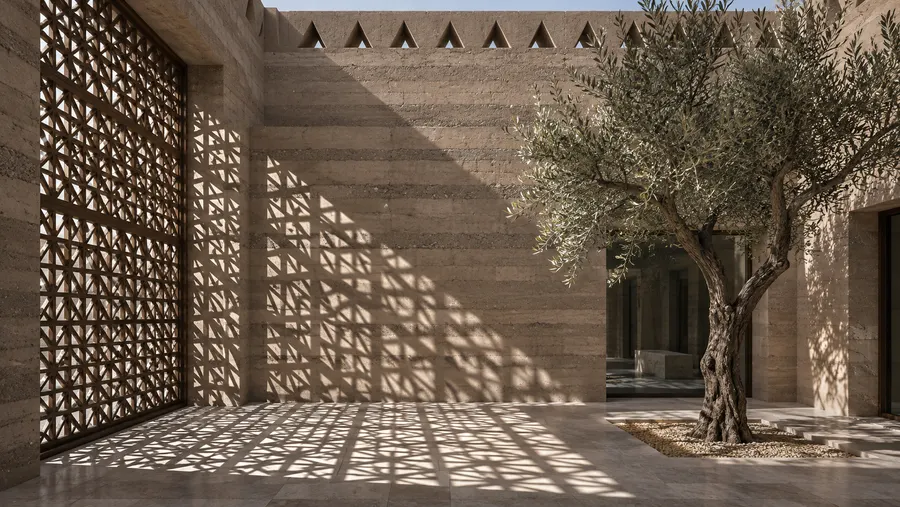
The courtyard is the oldest climate machine in Najd. It has no moving parts. Its walls shade its floor for most of the day, cool night air settles into it and stays, and every room that opens onto it borrows that coolness.
We wanted to know how much of this was true in numbers, and which proportions mattered most.
How we measured
Twelve loggers recorded air temperature and humidity every ten minutes: in the courtyard at three heights, in four rooms, on the roof and in the street outside. A thermal camera took the surface of every wall at dawn, noon and late afternoon. The family carried on living in the house as usual.
What we found
In the afternoons the shaded courtyard floor stayed several degrees cooler than the street, by up to around eight degrees on the hottest days we recorded. The coolest air sat at the bottom of the courtyard until late morning, then rose and spilled out as the sun reached the floor.
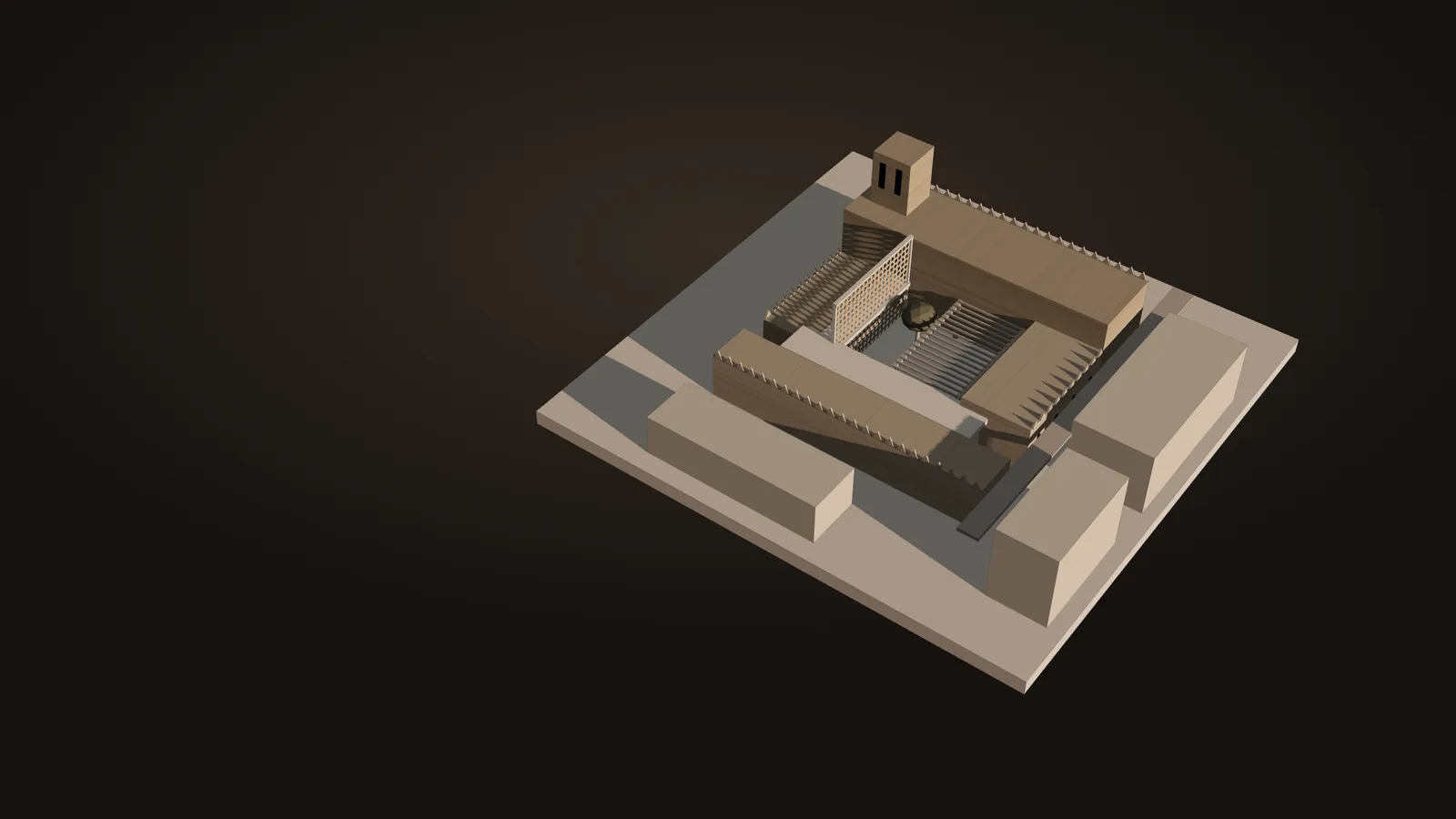
Proportion mattered more than size. Courtyards deeper than they were wide kept their floors in shade far longer, and the gain flattened out beyond a certain depth.
Rules we now draw with
- Courtyards are drawn deeper than they are wide, about 1 : 1.3 or more.
- The west wall of a courtyard is the tallest wall of the house.
- Planting and water go in the part of the floor that stays in shade longest.
- Rooms that open onto the courtyard get low openings for the cool air and high ones to let warm air out.
Figures describe the buildings we measured, in the conditions we measured them. They are a starting point for design, not a guarantee.